Tuesday, January 28, 2020

Viral Infection/ Cold/ Flu


What is flu? Its a viral respiratory illness caused by influenza virus. Symptoms: High Fever, runny nose, cough, body ache, tiredness, headache, diarrhea/ vomiting. Highly contagious, one can spread it 1 day before they got sick to 7 days after. Fever can last from 2-7 days.

Complications: mainly small children and elderly patients, get coughing with breathing problem. Mainly due to flu pneumonia or association with other bacterial infections.

Common cold: Viral infection other than by influenza virus. Mainly present as runny nose, sore throat and cough

Season: From late October to early March is a time frame when most of people get sick from flu or other viruses.

Why in winter? Its a myth that flu is caused by cold temperature. Cold is only favoring factor, but it is caused by a influenza virus.
- Influenza virus survive longer on surface in cold & dry temperature. they love cold and dry weather. 
- Lack of sunlight or staying more indoor decrease our immunity( ability to fight infection)
- Lack of fresh air circulation in house due to closed door and windows cause high possibility of spread of infection from one to another.

What helps to avoid flu?
- Stay warm and hydrated
- Use Humidifier 
- Go out in sunlight
- Open doors and window for few minutes during day time every day 
- Flu vaccine: Helps to avoid complications of flu, it takes a week or two to get its effect. So take flu shot early in cold season.
- Frequent hand washing and covering mouth while coughing help decrease its spread

Who need treatment with antivirals? 

High risk individuals, Children<5 years or people>65 year, people with diabetes, heart disease or asthma. Antivirals shortens course of disease by couple of days and may help prevent complications/ hospitalization

Weather its influenza or corona virus or other respiratory virus, not all the people who get exposed get symptomatic. Why? because they had flu vaccine/ they are more active, hydrated and stay more in sunlight or in area with good fresh air movement. This is true with any virus or bacteria. Get vaccine if available, and stay in sunlight with fresh air circulation.


Other sources of reading:

https://www.cdc.gov/flu/symptoms/symptoms.htm

http://sitn.hms.harvard.edu/flash/2014/the-reason-for-the-season-why-flu-strikes-in-winter/

https://www.cdc.gov/flu/highrisk/pregnant.htm


Monday, January 13, 2020

Headache

Headache is a feeling of pain/heaviness in the head.

Types of Headache, causes and modality to help reduce it:

Most Common type of Headache: 

1. Tension Headache:

Mild to Moderate pain that comes and go over time. Mainly felt pain / heaviness over frontal region. Its most common type of headache. Occurs mainly due to
- Emotional Stress
- Fasting
- Lack of sleep
- strong smell : ex.perfume, smoking, smoke
- noise
- weather change
- gas trouble/ certain food
- overuse of phone, TV,laptop
*Try avoiding situation that gives you headache. Coffee+ Tynelol might help.

2. Migraine Headache:

Throbbing headache lasting couple hours to days, and reappears few times every month. Usually associated with sensitivity to light, noise or smell.  Sometime patient may experience paralysis like symptoms with migraine headache.

*Avoid triggers such as fasting, lack of sleep, noise. Tynelol extrastength, Ibuprofen / other medicine recommended by physician can help


3. Cluster Headache:

Intense peircing pain behind the eye. Associated with tear, red eye. last for 15min-2hours, for 2- 3 times a day for many days. May associated with sweating. Comes at the same time each day. Triggers: trigeminal neuralgia/smoke/ allergies/sinusitis. *Avoid / treat triggers.

Other Causes of Headache:

1. New / change in Eye number/glasses

It usually causes bitemporal (on side) headache. It is usually associated with difficulty reading small letter from distant/ headache after reading books. Mainly caused by refractive errors.
*Mostly patient need new glasses and check up with ophthalmologist.

2. Drug withdrawal:

ex. Missing a daily dose of Alcohol, Coffee, Tea. Nitrate withdrawal(medicine to treat angina).

3.  Hormonal changes/ cyclic headache

Women may experience headache couple of days before starting of menstrual period every month. *Ibuprofen might help.

4.  Infection in sinus/denture:

A. Frontal sinusitis following cold, or other upper respiratory diseases. *Needs antibiotic treatments under physician's direction
B.: Dental infection: associated with dental pain. *Need antibiotics and dental check up

5. Dehydration

Drink water, and Oral re-hydration solution with electrolytic powder helps.

6. Fever: 

Tynelol/ controlling fever helps.


Causes of Headache that needs immediate medical attention: 

1. High blood pressure:

Patient known to have blood pressure on medicine, complain of headache in the middle of the head/vertex (pounding headache). H/o skipping medicine or + of pedal edema. This kind of headache usually is caused by high blood pressure. + very high blood pressure(>180mmhg) with nausea suggest developing encephalopathy. *Blood pressure control is needed under physician guidance.

2. Glucoma:

High fluid pressure in eye chamber can damage optic nerve. Associated with vision changes, halos, eye pain, and nausea and headache. Immediate opthalmologist / eye dr. attention needed to prevent blindness. Eye drops and medicine to decrease fluid production/ increase drainage in eye chambers helps. 

3. Intracranial causes: Headache is always associate with nausea and or vomiting

A: Meningitis: infection of covering of brain. Associated with fever, neck stiffness and nausea/vomiting. *Treated with intravenous antibiotics.
B: Intracranial Bleeding (Subarrachnoid hemorrhage): These are the worst headache of one's life, associated with nausea /vomiting, later neck stiffness. Usually patient has history of high blood pressure. *Patient is usually admitted to ICU for care.
C: brain mass/ tumor: Associated with nausea, vomiting and weight loss. *Surgical removal needed depend on type of mass.
D: ventricular enlargement (hydrocephalus): Due to blockage of CSF drainage due to mass or bleeding. Associate with nausea, drowsiness and gait changes/fall. *Surgeon usually puts a EVD(type of tube to drain excessive fluid)
E: blocked vain in head, stroke 
*Medical care with neurologist/ neurosurgeon needed for all intracranial issues

4. Post Lumber puncture Headache:

This occurs post spinal tap due to CSF leak. Severe Headache occurs on getting up from bed. Lying down in bed helps. *Usually complete bed rest for few days and or placing a patch in the leak needed.

5. Inflammation of temporal artery:

Headache on temporal region with thick pulsatile artery. Associated with loss of appetite, fever, pain in jaw on chewing and vision changes. It needed immediate attention as it can lead to blindness. * Need treatment with steroids.

Referances: 
https://www.medicinenet.com/headache/article.htm
https://www.webmd.com/migraines-headaches/migraines-headaches-basics#1
https://www.health.harvard.edu/pain/headache-when-to-worry-what-to-do

Friday, October 25, 2019

Does technology helps or damage our health?

Now a days wherever you see, you will see people engaged in cellphone or tablet. Using smart technology to reduce work.

Pros:
- Get updated with world news
- Stay in touch with distant friends and family
- keeps your mind busy
- less physical work

Cons:

1. More cases of headache, neck pain, back pain and knee pain

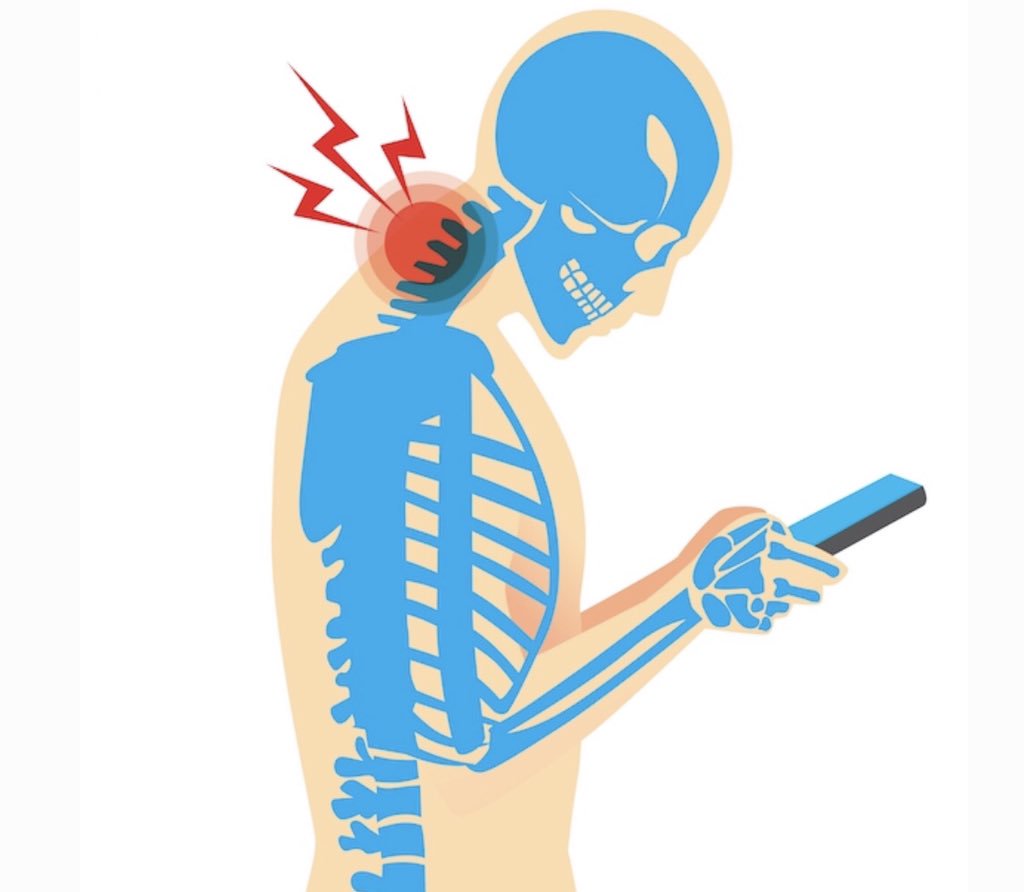
Text Neck : Due to constant bending of neck while using phone, it can cause permanat damage to cervical spine and can cause pain, numbness or weakness in arm or fingers.


Headache: 
Meta-analysis Studies by Wang J.(1)  showed that mobile phone/ digital item use is significantly associated with headache.

Back Pain: 
In this digital world everyone work with computer more or less, People who sit constantly in front of computer, or sitting  job with non proper back positioning can damage lower back spine and cause back pain and nerve root shooting pain in limbs (2).

Knee pain: 
Sitting with crossed leg and lack of exercise causes damage to knee joint article which cause knee pain.

2. Increased in Sedentary lifestyle

Digitization has caused person to use of computers and laptops more and more at work, working on that has made life style more sedentary without exercise in routine work.  It led to the problems such as Diabetes, Obesity and cardiovascular problems  (2)

3. Depression/ Person feel lonely without it

Cell phone and internet excessive use causes addiction of it. It has increased a distant between family members. In absence of phone, person feels lonely and depress. Its more common with youth and kids. Cases of depression are increasing with increase internet/ smartphone usage. (3)

Solutions:

1. Be smart and aware: Limit use of cell phones and digital devices.
2. Exercise: Walking, household work, gardening, cooking, cleaning are good ways of exercise and use of time
3. Talk: Talk to people in your family, friends, meet in person, go to social gatherings.
4. Breaks: Give yourself frequent breaks on work, to drink water, take a small walk, take stairs , so you can get up and move around rather sitting in one place at job.
5. Proper positing while sitting: Here is the link from Harvard health for good positioning and posture
https://www.health.harvard.edu/pain/4-ways-to-turn-good-posture-into-less-back-pain


Reference:

1. Wang J, Su H, Xie W, Yu S. Mobile Phone Use and The Risk of Headache: A Systematic Review and Meta-analysis of Cross-sectional Studies. Sci Rep. 2017;7(1):12595. Published 2017 Oct 3. doi:10.1038/s41598-017-12802-9

2. Anna Citko at el, .Sedentary Lifestyle and Nonspecific Low Back Pain in Medical Personnel in North-East Poland.BioMed Research International ,Volume 2018, Article ID 1965807, 8 pages https://doi.org/10.1155/2018/1965807

3. Alhassan AA, Alqadhib EM, Taha NW, Alahmari RA, Salam M, Almutairi AF. The relationship between addiction to smartphone usage and depression among adults: a cross sectional study. BMC Psychiatry. 2018;18(1):148. Published 2018 May 25. doi:10.1186/s12888-018-1745-4

Tuesday, September 24, 2019

High Blood Pressure / Hypertension

What is Blood Pressure: 

There are two numbers in blood pressure:  one is systolic and another is diastolic blood pressure. 

Systolic blood pressure:
Pressure required by heart to squeeze blood from heart to various blood vessels to supply oxygen to organs. Normal systolic blood pressure is under 120 mmHg.

Diastolic Blood pressure:
Resting pressure in artery between two heart beats / when heart is resting. Normal diastolic blood pressure is under 80 mmHg.

As per previous guidelines, normal blood pressure was under 140/90 but as per new guidelines it is 120/80.

Complication of uncontrolled high blood pressure:

Brain damage / Stroke (paralysis)
Heart failure
Retinal damage (vision problems)
Renal/Kidney damage

Practical approach: 

When the medicine is needed to control blood pressure?

Examples:

1. My mom is having hypertension from past 20 years and she is on 3 blood pressure control medicines. Her medicine dose was increased 3 months ago as her pressure was staying in range of 170-180 systolic. She is in India, I am in US but I am still her primary physician. Yesterday she called me that she is getting tired a lot even if she does small work from past 1 week. I know we might think may be she is getting symptoms of heart failure but I knew her and all her history so, I knew her heart has mild hypertrophy but its function is fine. There were no leg swellings/pedal edema. I ask her to measure her blood pressure. To her surprised it was 116/ 64 , at two different times. I stopped one out of 3 of her medicines. After two days her blood pressure was 130/80. She was feeling great and was back to her routine. 

Tight blood pressure control is not needed but it should be below 140/90 in chronic hypertensive patients. As guideline changed from 140 to 120 as normal systolic pressure, but patients whose heart was accustomed to 140 may not tolerate lower pressure. On the other end, in young newly diagnostic hypertensive patient tight control of blood pressure with diet, exercise and medicine is recommended.


2. I know a physician whose blood pressure ranged between 140-160 on medicines. He used to say it was normal for him. After 5-7 years he got a stroke and half body weakness, at the time of stroke BP was 180 systolic. Learning point: BP  should be tightly controlled to be less than 140 mmHg systolic in chronic hypertensive patients. 

3. 24 year old man complaining of headache, BP=140/90. This is not normal. All other tests were normal, no secondary causes identified which raises blood pressure. I started him on low salt diet and exercise. But he was symptomatic due to headache. So, I have to start him on medicine. I started him on low dose of B blocker. After 6 months, his BP was normal.  Then I tapered his medicine. And now he free without hypertension, not on any medicine from past 7 years. BP should be controlled to be 120/80 in young or any symptomatic patient.

Prophylactic Aspirin in Hypertensive patients?

Low dose of aspirin is recommended in many patients to prevent stroke and heart attack who have hypertension, or mild blockage. Aspirin is a two age sword. It can protect us from stroke ( in which lack of blood supply damage brain tissue)  or it can worsen the stroke( bleeding in brain from rupture of artery due to high pressure). 
In patient taking aspirin tight blood pressure control below 140 systolic is needed to prevent intracranial bleeding.


Do I need to take medicine if my blood pressure is normal on medicine?

Yes. If your BP is controlled after starting you on the medicine, you should keep taking it regularly. If it goes down then you can start adjusting its dose/ tapering it off under physician's guidance.


Learning points:

Walking, losing 10% of body weight and staying stress free helps control the blood pressure.


Reference:

Tuesday, August 27, 2019

Knee joint osteoarthritis


What is osteoarthritis of knee?

Knee joint is a hinge type of joint which get lubricated with synovial fluid secreted from cartilage covering the bone that make this joint. Over the time the joint space decreases which cause two bones to rub against each other damaging cartilage.


Causes/ Predisposing factors:

1. Old Age: >45 year . Due to wear and tear of joint.
2. Weight: It increases pressure on joint
3. Repetitive injury / stress on knee joint: Squatting, kneeling, lifting heavy weight, sittng crossed legs for longer time
4. Heredity/genetic

Symptoms:

Pain in knee while walking
Knee swelling
Feeling stiffness in knee joint, Difficulty standing up from sitting

Diagnosis:

- X ray knee joint: Decrease in joint space with or without cartilage damage
- MRI

Prevention and Treatment:

Avoiding risk factors:

1. Reduce body weight 
2. Avoid heavy weight lifting
3. Avoid sitting with crossed legs
4. Do regular exercise: Walking is a good exercise. It increase joint fluid section which help to lubricate joint.

Symptomatic Treatment:

1. NSAIDS/ pain medicine: Ibuprofen , Naproxane can help but long time use (>7 days) of these medicine should be avoided

2. Physical Therapy: It can help to improve joint function and reduce pain

3. Steroid or hualuronic acid ( joint lubricant) injection in to the joint: It can help to relieve pain  in the early stage of the disease

4. ACS:  Also known as serum treatment: It has mixed results(3). As per one study it's better than fluid/ lubricant injection but, after 2 years its not sure. One study says it helps on mild disease only. Another study says its not effective. I would say it might help to prolong the disease but ultimately after couple years you will be on same page.

Definitive Treatment:

Knee joint replacement is recommended in stage 3 or 4 of the disease.


Reference:

1. https://www.webmd.com/osteoarthritis/ostearthritis-of-the-knee-degenerative-arthritis-of-the-knee#1

2. https://www.medicalnewstoday.com/kc/stages-osteoarthritis-knee-310579

3.Antonio Frizziero, Erika Giannotti, Francesco Oliva, Stefano Masiero, Nicola Maffulli, Autologous conditioned serum for the treatment of osteoarthritis and other possible applications in musculoskeletal disorders, British Medical Bulletin, Volume 105, Issue 1, March 2013, Pages 169–184, https://doi.org/10.1093/bmb/lds016


Monday, July 1, 2019

Stress - the biggest enemy of our health?

What is Stress?

In a simple words, when your mind thinks a lot over any situation in life, you feel heaviness in head. You lose happy and calm nature of yourself. It is called stress or tension.

Continuous stress is the biggest enemy of health.

Causes of stress:

1. Dissatisfaction:  either with work, or position.
2. Not letting go nature: Think constantly about why someone said this or that to me
3. Holding on to things: Rigid in the way things should be
4. Lack of guts to take responsibility: blaming other people for any unwanted situation
5. Finding goal /making decisions: difficulty deciding what you want to do.
6. Unexpected problems: loss of job, or family, sickness


Complications:

Health Issues :

1. Hypertension
2. Heart problems
3. Stroke
4. Depression
5. Anxiety
6. Headache
7. Hair fall/ Gray hairs

Social issues/ personality change

1. Family problems
2. Change in behavior/ Angry nature
3. Feeling Lack of happiness
4. Loss of peace


Solutions:

Stress is the status of mind. You need to take mind out of that state. Divert the thought, or even better way is to convert the thought.

1. Convert Dissatisfaction at work to self satisfaction:
ex.You are working more than your coworker without getting recognized.
Here there are two problems:
A. Comparison: Don't compare, instead recognize your good points and use it for everyone's benefit.
B. Need for appreciation: Believe in yourself. If your work is good enough, you will get recognized eventually. Take a break/ vacation.

2. Let things go: 
If someone said something to you that you didn't like, stop for a moment. Think about it. Are you really that kind of person, if yes then take it as granted and try to improve. If that was false blame, you can reply back or let it go. Let stuff you don't like go out of your mind. Divert mind to your hobby or things you like.

3. Be flexible:
Flexibility helps reliving stress. Don't be to rigid on thing should be this way or that way.Or other should follow your ways.
Ex. you don't like wet towel to be thrown on bed after bath and you want your husband to hang it in a proper place to dry. Rather than getting angry or saying you never put things in proper place, you place it in right place as soon as he/she throws towel on bed. Do this couple of days, later you can say it would be nice it you help me by hanging this towel to dry.
-Help is a good word to use than saying or forcing someone to do things in your way.
Remember if you like keeping thing certain way, its is your problem, not others.

4. Take Responsibility:
Don't blame others all the time. Remember the saying, when we point one finger at other, the other 4 fingers points at us. Best thing is to look at other's positive points.

5. Decision making:
In time when you have to make important decision about life and you feel stressed;
Take advice from friends and family, write down all positive and negative points about new situation and in the end follow your heart/gut feeling.

6. Unexpected problems:
Believe in God. Give some time for meditation, and spirituality. It makes you calm and focused. Spiritual people are more tolerable to unexpected loss/ problems.


Tuesday, June 18, 2019

Constipation

1. Constipation In Children

Hard stool, infrequent bowel movement in Children are very common

Symptoms:

Hard Stool
Bowel movement every 2nd or 3rd day
Bloating/Gas
Abdominal Pain while passing stool

Causes:

- Fear of passing stool
- Less fibers in Diet 
- Drinking less or infrequent water
- Milk allergy
- Certain pain medicines or antidepressant medicines
- Rarely low thyroid hormone 

Treatment/Solution:

1. Make sure child is not afraid of passing stool.
These happen while starting toilet training or when child starts school. Child avoid going to toilet and hold stool, which cause stool to get dry and hard.
- Make a habit to make child sit on toilet for 10 minutes in the morning and evening. Once they stat passing stool at a regular time fear will go away.

2. Add more fibers in diet / Make child Eat at least two fruits and vegetables in a day
These include banana, applesgreen vegetables, whole grains like roti and bread. Taking 2 prunes a day really helps.

3. Ask child to drink more water
Keep eye on how much water your child drink. 5 year old should drink atleast 5 glass of water a day.

4. Try changing milk or stopping milk for couple of days and see if that helps

5. Make sure child is active and doing enough exercise
Activity helps to relieve constipation. Play with child such as hide and sick, or tag or dancing. Now a days when outdoor games are becoming less and less and TV has made life sedentary, exercise is needed in form of free play.

5. If child is taking medicines which can cause constipation, stop medicines if not needed or try taking fiber tablets to avoid constipation

6. If constipation is associated with obesity and concentration problem, check child's thyroid hormone level with your physician.

More information can be found on following link by mayo clinic on constipation in children.

https://www.mayoclinic.org/diseases-conditions/constipation-in-children/symptoms-causes/syc-20354242


2. Costipation in Adults

Two type of constipation in adult. Acute which can be due to bowel obstruction and chronic. Here we will discuss only on chronic constipation

Symptoms;

- Straining while passing stool,
- difficulty in passing stool
- irregular/infrequent bowel movement.

long term non-treated constipation can cause following side effect

-Piles/ hemorrhoids - due to straining
-Anal Fissure- as hard stool rub and damage anal mucosa


Causes:

- Sedentary Life style
- Drinking less water
- Less fibers in Diet
- Obesity
- Drinking coffee and soda
- Pregnancy
- low thyroid hormone
- Antidepressant, codeine or opioid pain medicines

Solution:

1. Avoid coffee/ excessive black tea and sodas
2. Try changing or stopping milk
2. Drink plenty of water - 8 to 10 glass a day
3. Eat more fibers in Diet: fruits, vegetables, prune and prune juice helps
4. Exercise regularly- walk 20- 30 minutes a day
6. Use Castor oil coated rice, wheat and lentils rather than dry lentils
7. Reduce weight, check thyroid hormone and get treatment if you have hypothyroidism
8. Use fiber tablets and stool softner in case you also have anal fissure or piles